Last Updated: September 2026
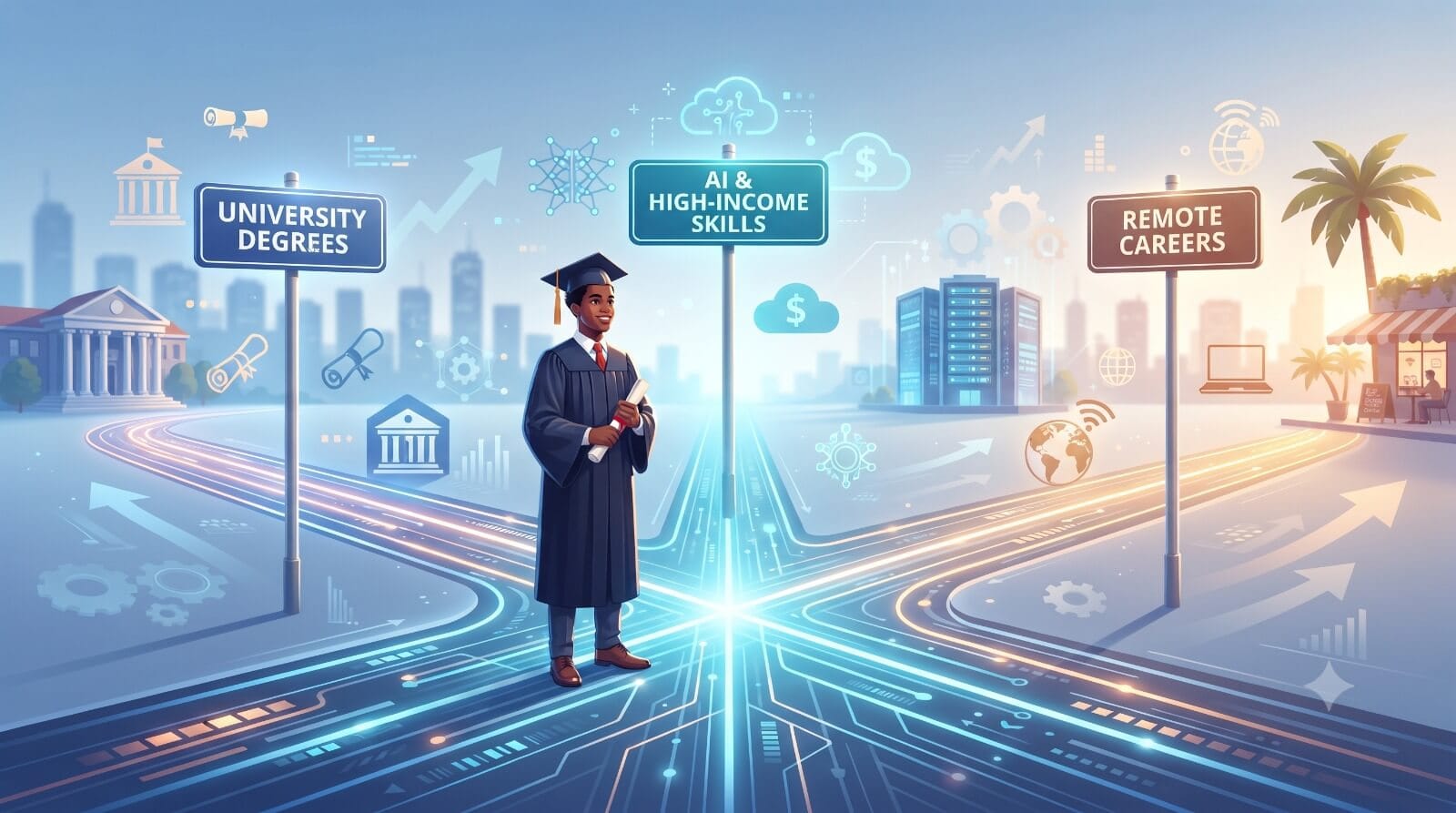
Finishing high school is one of the most exhilarating milestones in a young person’s life. Suddenly, the structured, bell-ringing days of secondary school are gone, and you are standing at a massive crossroad. The world is shouting advice at you from every direction: “Go straight to university!”, “No, start a business!”, or “Learn coding and make millions!”
With so much noise, it is completely normal to feel paralyzed by indecision. If you are wondering, “What should I do after high school?”, you are not alone. Traditional career advice that worked for our parents—get a degree, land a 9-to-5 job, and work there for 40 years—is rapidly shifting. In the age of artificial intelligence, automation, and global remote work, the rules of success have been rewritten.
Here at Degree to Careers, our goal is to help you cut through the confusion. In this comprehensive, 2026-updated guide, we will break down the exact framework you need to navigate your next steps, blending traditional education with modern high-income skills, financial reality checks, and a step-by-step roadmap tailored for global success.
Part 1: The Post-High School Reality Check – Degree vs. Skills in 2026
Before you make any major financial or life commitment, you need to understand the modern economic landscape. Let’s strip away the societal pressure and look at masculine hard facts.
1. The Shifting Value of a Traditional Degree
For decades, a university degree was treated like a golden ticket. Today, while degrees in specialized fields (like medicine, law, civil engineering, or architecture) remain mandatory, a general undergraduate degree no longer guarantees instant employment.
- The Problem: Many graduates enter the job market with thousands of dollars in student debt, yet lack practical, hands-on portfolio experience.
- The Reality: Employers today care less about where you studied and much more about what you can actually do. They want to see problem-solving abilities, project portfolios, and adaptability.
2. The Rise of the “Hybrid Professional”
The most successful young adults entering the workforce today are Hybrid Professionals. These are individuals who combine foundational academic knowledge or critical thinking skills (gained from college or structured self-study) with high-demand digital execution skills (such as data analysis, AI orchestration, digital marketing, or software development).
3. Assessing Your Personal Matrix: The 3 Pillars
Before choosing your path, honestly evaluate three critical factors:
- Financial Runway: Do you have the resources to commit 3 to 4 years exclusively to full-time university studies, or do you need to start generating income sooner rather than later?
- Learning Style: Do you thrive in structured, theoretical classroom environments, or are you a self-directed learner who excels through hands-on projects and execution?
- Long-Term Vision: Do you want to build a career in a regulated corporate/institutional sector, or are you aiming for the borderless world of tech, startups, freelancing, and remote work?
Part 2: Choosing Your Path – The 3 Core Routes After High School
Once you have completed your reality check and assessed your personal matrix, you will generally find yourself choosing between three primary pathways. Each path has its own unique pros, cons, and ideal candidate profile.
Route A: The Traditional University/College Track
This remains the classic route, especially if your long-term career goals involve regulated professions.
- Best For: Those aiming to become doctors, lawyers, certified engineers, researchers, accountants, or corporate leaders in traditional institutions.
- The Hidden Pitfall: Choosing a major simply because “it sounds prestigious” without checking market demand or your own genuine interest.
- The Smart Execution: If you choose this path, do not rely solely on your classroom syllabus. Treat university as a networking ground while actively building practical side-skills during your semesters.
Route B: The Skill-First & Fast-Track Digital Route
In the modern economy, digital literacy and specialized execution can fast-track your career independence without requiring a 4-year degree.
- Best For: Creative thinkers, tech enthusiasts, self-starters, and those who need to build an independent income stream relatively quickly.
- Core Focus Areas: Digital marketing, video editing, UI/UX design, front-end development, copywriting, and AI workflow management.
- The Smart Execution: Dedicate 6 to 12 months to intense, project-based learning. Build a public portfolio (e.g., case studies, GitHub repositories, or Behance showcases) to prove your competency to global clients or employers.
Route C: The Hybrid Approach (The Modern Sweet Spot)
A growing number of smart high school graduates are now opting for the hybrid route: pursuing a flexible or online-friendly undergraduate degree while simultaneously mastering high-income digital skills on the side.
- Why It Works: You secure your formal academic credential (satisfying family or societal expectations) while gaining real-world marketplace experience, ensuring you graduate with both a degree and a working income.
Part 3: High-Income Skills to Learn in 2026 (The AI & Digital Era)
Whether you choose the traditional university route, the fast-track skill route, or the hybrid approach, mastering at least one or two modern high-income skills is no longer optional—it is your ultimate career insurance.
1. AI Orchestration & Prompt Engineering
You don’t necessarily need to build AI models from scratch, but you must know how to leverage them. Businesses globally are desperately looking for professionals who know how to integrate AI tools (like ChatGPT, Claude, and specialized automation agents) into daily workflows to boost productivity.
2. Digital Marketing & Growth Hacking
Every business—from local cafes to massive global e-commerce brands—needs customers online. Mastering modern performance marketing involves paid advertising, SEO, and data analytics.
3. Modern Creative & Technical Execution
If you have a creative flair or a logical mindset, specific execution skills command very high retainers in the global freelance market:
- UI/UX Design: Designing clean, user-friendly mobile app and website interfaces.
- Front-End Development & No-Code Tools: Building functional websites using modern frameworks or platforms.
- Video Editing & Motion Graphics: High-retention short-form video editing for global creators and brands.
Where to Learn These Skills for Free: You do not need to spend thousands of dollars on expensive bootcamps. Platforms like Coursera (using Financial Aid), Google Career Certificates, and YouTube masterclasses provide world-class education.
Part 4: Building Global Credibility & Avoiding Post-School Pitfalls
Once you have identified your path and begun acquiring skills, the next major challenge is proving your capability to the global market and avoiding common traps.
1. Proof Over Paper: Building Your Global Portfolio
When applying for remote jobs, internships, or freelance gigs globally, clients rarely care about your high school grades. They care about your proof of work through personal websites, mock projects, and optimized profiles on LinkedIn and Upwork.
2. Common Traps to Avoid After High School
- The “Tutorial Hell” Trap: Spending months watching endless video tutorials or buying courses without actually building anything or executing real projects.
- Chasing Shiny Objects: Constantly jumping from one trendy skill to another without mastering a single core competence.
- Ignoring Soft Skills: Communication, reliability, time management, and problem-solving dictate how far you will go in a global remote environment.
Part 5: Your Step-by-Step Action Plan & Conclusion
Transitioning from high school to the next chapter of your life can feel overwhelming, but clarity comes through structured action. Here is a practical, 4-step action plan you can start executing today:
The 30-Day Transition Action Plan
- Week 1 (Self-Audit & Research): Assess your financial runway, learning style, and choose between traditional, fast-track, or hybrid approaches.
- Week 2 (Niche Selection): Pick one core domain (e.g., Digital Marketing, UI/UX Design, or AI Tools Integration) and commit fully.
- Week 3 (Structured Learning & Execution): Enroll in a reputable online course and spend 3 to 4 hours daily on hands-on practice projects.
- Week 4 (Portfolio & Profile Building): Set up a professional LinkedIn profile and build a simple landing page showcasing your projects.
Conclusion
The post-high school phase is not a race; it is a marathon of self-discovery and skill acquisition. Whether you choose a university degree, dive straight into the digital economy, or blend both, remember that your execution and adaptability matter more than any single piece of paper. Take your very first step today!
Frequently Asked Questions (FAQs)
Q: What is the best career path to choose right after high school?
A: The best career path depends on your financial situation and goals. If you want to enter regulated fields like medicine or law, a traditional university track is necessary. However, if you want fast-track financial independence, learning high-income digital skills or opting for a hybrid approach is often the smartest choice.
Q: Can I get a good job without a university degree?
A: Yes, absolutely. In fields like digital marketing, web development, UI/UX design, and AI orchestration, employers and global clients value a strong portfolio and demonstrated practical skills far more than a traditional college degree.
Q: How can I learn high-income skills for free?
A: You can leverage platforms like Coursera (via Financial Aid), Google Career Certificates, YouTube educational channels, and free documentation hubs. The key is consistent, hands-on project execution rather than just passive learning.
Q: What is the “hybrid approach” for high school graduates?
A: The hybrid approach involves pursuing a flexible or online-friendly undergraduate degree to satisfy formal educational requirements while simultaneously acquiring modern high-income digital skills on the side to build early income streams.
Written by the Degree To Careers Editorial Team
Reviewed for compliance with international student visa regulations and global employment standards.